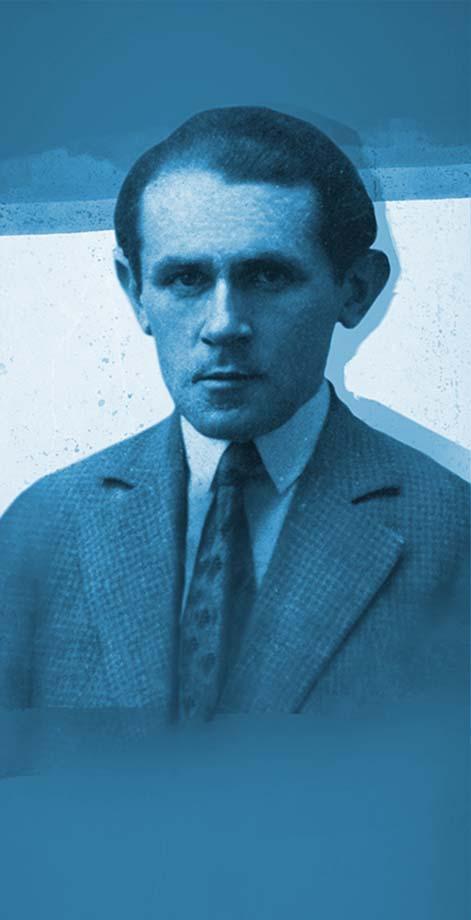
12 VII 1892, Drohobycz (aujourd’hui en Ukraine) — 19 XI 1942, Drohobycz
Bruno Schulz était un écrivain, graphiste, peintre et dessinateur. Ses deux collections de nouvelles, Les Boutiques de cannelle et Le Sanatorium au croque-mort, sont toujours largement lues et analysées dans le monde entier. Considéré par beaucoup comme un génie créatif et une figure mythique, il continue à être une inspiration pour les autres artistes jusqu’à aujourd’hui.
Bruno Schulz est né le 12 juillet 1892 dans une famille de marchants de tissu habitant à Drohobycz (aujourd’hui en Ukraine). Sa famille appartenait à la communauté juive, cependant, elle ne vivait pas selon les traditions juives et elle avait choisi le polonais, au lieu du yiddish, comme langue.
Dans ses écrits il immortalisa l’immeuble locatif dans lequel il vivait, le décrivant dans une série de nouvelles qui furent publiées sous le titre de Les Boutiques de cannelle (connues en anglais comme The Streets of Crocodiles). Après avoir reçu son diplôme du secondaire, il étudia l’architecture à la Polytechnique de Lviv. Pendant la Première Guerre mondiale, la famille de Schulz passa plusieurs mois à Vienne. Quand son père mourut, il assuma la responsabilité de subvenir aux besoins de la famille. En 1924, Bruno Schulz accepta un poste dans un collège de Drohobycz, d'abord en tant que professeur d’art, puis aussi comme professeur de travaux manuels.
Ses débuts littéraires eurent lieu en 1933 avec la publication de la nouvelle Oiseaux dans le magazine littéraire Wiadomości Literackie (« Nouvelles Littéraires ») ; en fait, Les Boutiques de cannelle fut publié la même année grâce au soutien d’un autre écrivain polonais, Zofia Nałkowska.
Bien que restant un modeste professeur d’une petite ville, Bruno Schultz devint rapidement une figure célèbre et importante de la scène littéraire varsovienne. En 1937, il publia une seconde collection de nouvelles, Le Sanatorium au croque-mort. Il resta en contact avec de nombreux artistes et écrivains de l’époque, y compris Witold Gombrowicz, Artur Sandauer, Witkacy (Stanisław Ignacy Witkiewicz), et Debora Vogel. Son art et ses écrits reflètent principalement les subtilités et complexités de sa vie intérieure. On pense que son énigmatique et inédite nouvelle, Le Messie, a survécu à la guerre, et la recherche du manuscrit perdu continue jusqu’à nos jours.
En 1941, quand les Allemands entrèrent dans Drohobycz, Felix Landau, un officier de la Gestapo connu pour sa cruauté, étendit sa « protection » à Bruno Schulz, lui ordonnant de produire plusieurs œuvres d’art en échange.
Finalement, Schulz fut tué par un autre officier de la Gestapo qui l’abattit dans la rue de sa ville natale le 19 novembre 1942. Ses œuvres, cependant, continue à vivre, attirant toujours l’intérêt des chercheurs et des lecteurs du monde entier.
Spring, XIV
Translated into English by Celina Wieniewska
A band is now playing every evening in the city park, and people on their spring outings fill the avenues. They walk up and down, pass one another, and meet again in symmetrical, continuously repeated patterns. The young men are wearing new spring hats and nonchalantly carrying gloves in their hands. Through the hedges and between the tree trunks the dresses of girls walking in parallel avenues glow. The girls walk in pairs, swinging their hips, strutting like swans under the foam of their ribbons and flounces; sometimes they land on garden seats as if tired by the idle parade, and the bells of their flowered muslin skirts expand on the seats, like roses beginning to shed their petals. And then they disclose their crossed legs – white irresistibly expressive shapes – and the young men, passing them, grow speechless and pale, hit by the accuracy of the argument, completely convinced and conquered.
At a particular moment before dusk all the colors of the world become more beautiful than ever, festive, ardent yet sad. The park quickly fills with pink varnish, with shining lacquer that makes every other color glow deeper; and at the same time the beauty of the colors becomes too glaring and somewhat suspect. In another instant the thickets of the park strewn with young greenery, still naked and twiggy, fill with the pinkness of dusk, shot with coolness, spilling the indescribable sadness of things supremely beautiful but mortal.
Then the whole park becomes an enormous, silent orchestra, solemn and composed, waiting under the raised baton of the conductor for its music to ripen and rise; and over that potential, earnest symphony a quick theatrical dusk spreads suddenly as if brought down by the sounds swelling in the instruments. Above, the young greenness of the leaves is pierced by the tones of an invisible oriole, and once everything turns somber, lonely, and late, like an evening forest.
A hardly perceptible breeze sails through the treetops, from which dry petals of cherry blossom fall in a shower. A tart scent drifts high under the dusky sky and floats like a premonition of death, and the first stars shed their tears like lilac blooms picked from pale, purple bushes.
It is then that a strange desperation grips the youths and young girls walking up and down and meeting at regular intervals. Each man transcends himself, becomes handsome and irresistible like a Don Juan, and his eyes express a murderous strength that chills a woman’s heart. The girls’ eyes sink deeper and reveal dark labyrinthine pools. Their pupils distend, open without resistance, and admit those conquerors who stare into their opaque darkness. Hidden paths of the park reveal themselves and lead to thickets, ever deeper and more rustling, in which they lose themselves, as in a backstage tangle of velvet curtains and secluded corners. And no one knows how they reach, through the coolness of these completely forgotten darkened gardens, the strange spots where darkness ferments and degenerates, and vegetation emits a smell like the sediment in long-forgotten wine barrels.
Wandering blindly in the dark plush of the gardens, the young people meet at last in an empty clearing, under the last purple glow of the setting sun, over a pond that has been growing muddy for years; on a rotting balustrade, somewhere at the back gate of the world, they find themselves again in pre-existence, a life long past, in attitudes of a distant age; they sob and plead, rise to promises never to be fulfilled, and, climbing up the steps of exaltation, reach summits and climaxes beyond which there is only death and numbness of nameless delight.
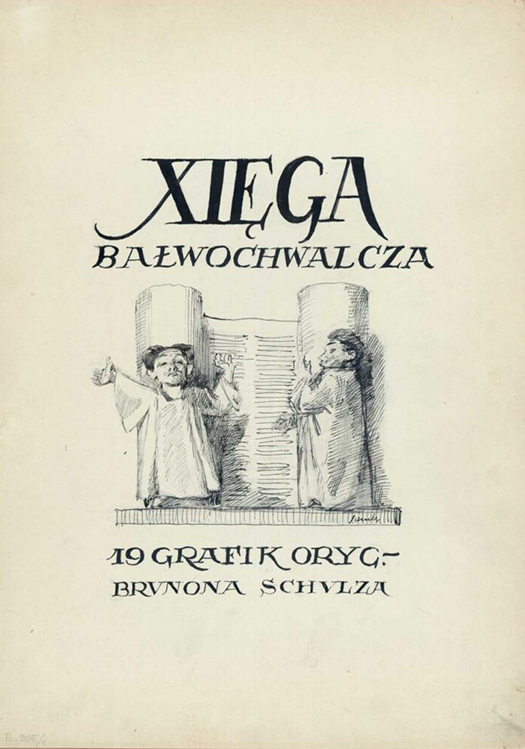
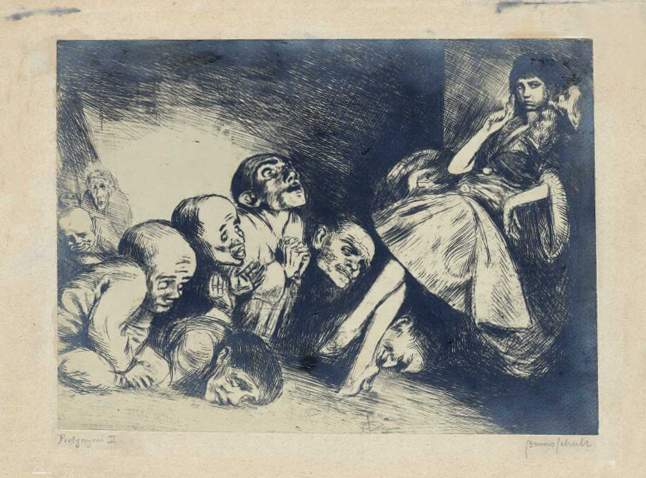
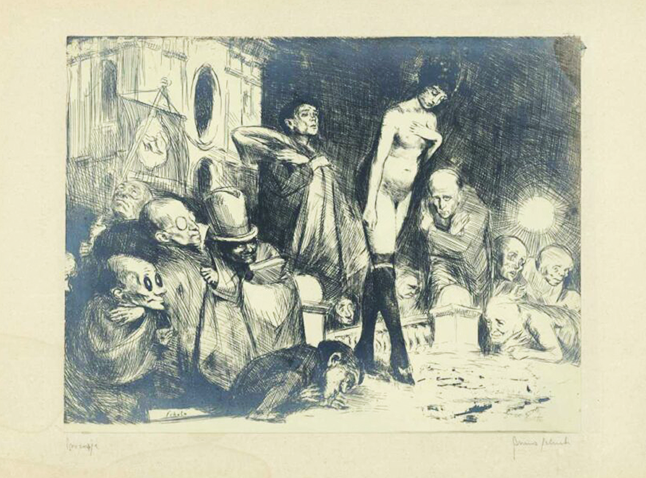
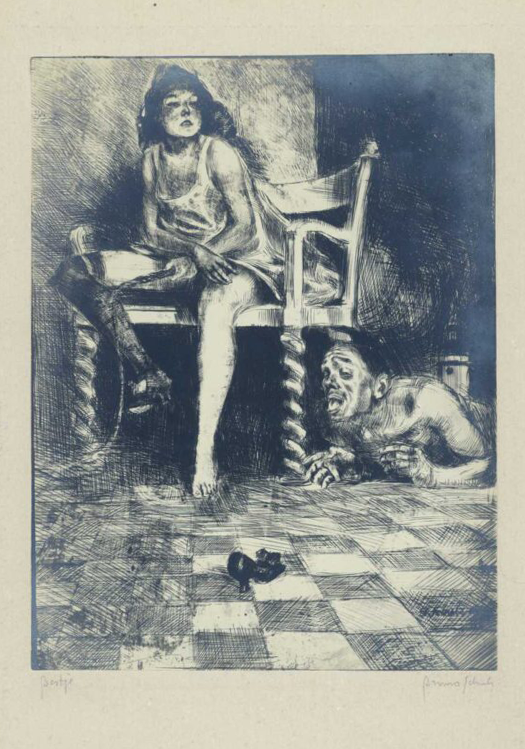
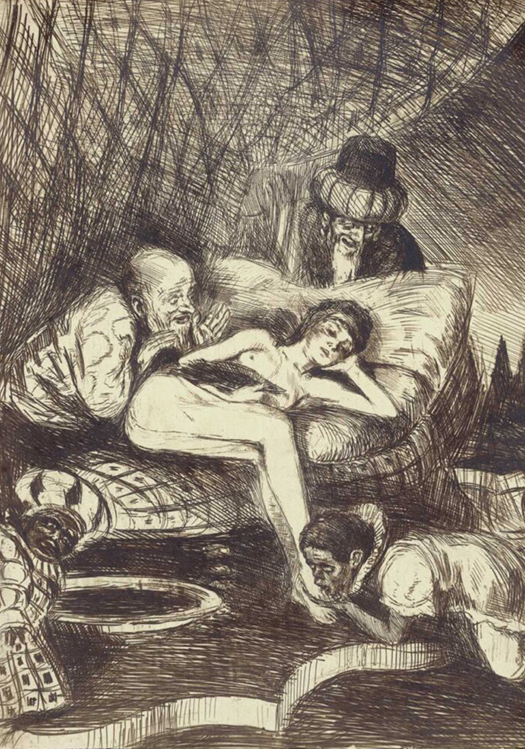
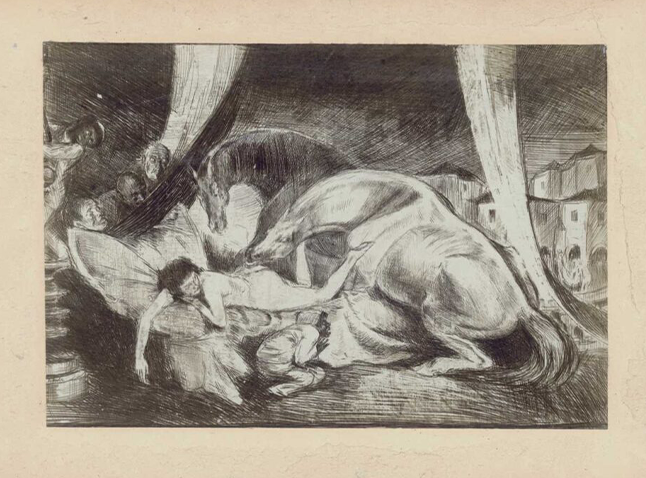
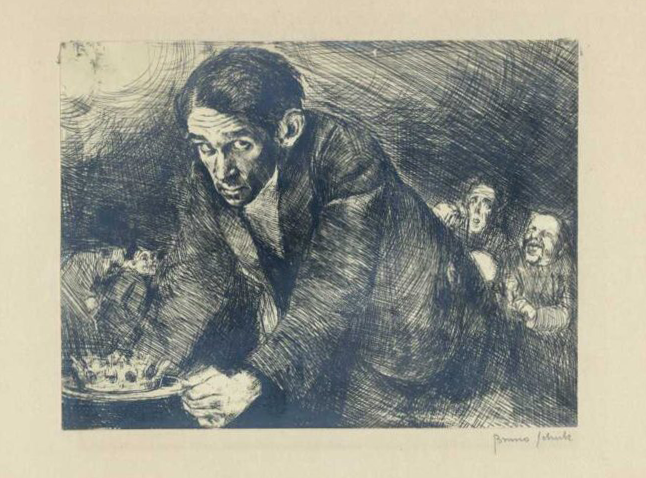
From the collection of The Adam Mickiewicz Museum of Literature in Warsaw