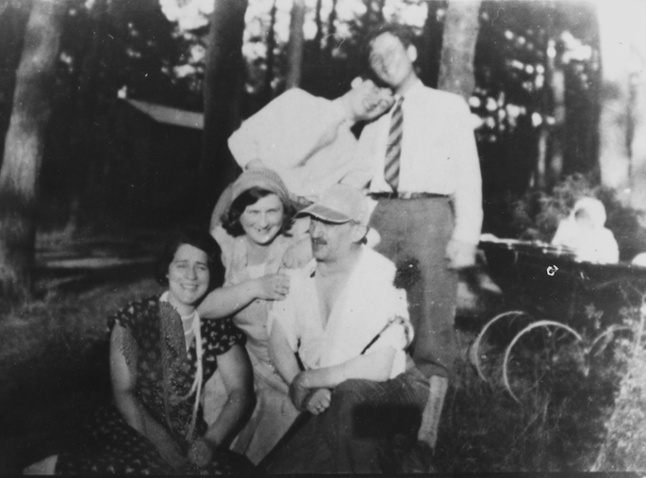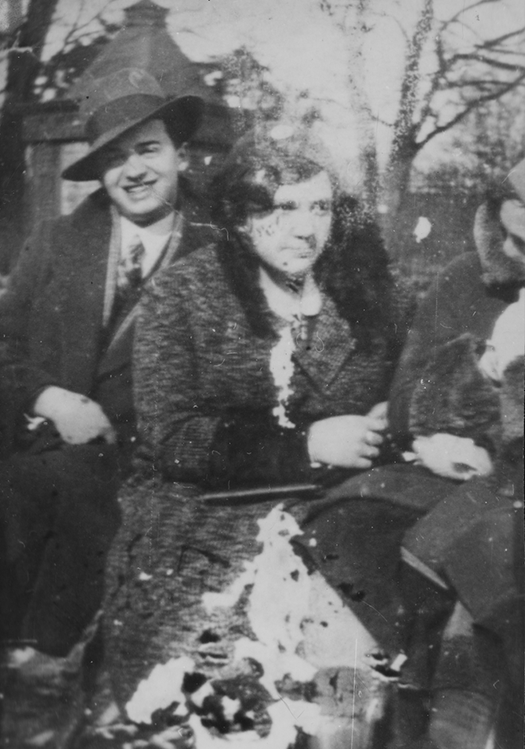
1912 (or 1914), Warsaw — May 8, 1943, Warsaw Ghetto
Władysław Szlengel was a poet, journalist, satirist, and stage actor. He was the author of many songs sung throughout Warsaw. He was the chronicler of the Warsaw Ghetto, often referred to as the “chronicler of the drowning”, and the author of the insurgents’ anthem.
Born in 1914 in Warsaw, his artistic work was largely connected to the city. From the beginning of the 1930s until the outbreak of the war, he collaborated with Nasz Przegląd (‘Our Review’), a journal of the Jewish minority in Warsaw. He also published articles in the satirical weekly magazine Szpilki (‘Pins/High heels’) and wrote on social and political issues for Robotnik (‘Worker’). He only wrote in Polish and was particularly fond of creating material for cabarets. He was providing lyrics and collaborating with such theatres as 13 Rzędów, Ali Baba, and Tip-Top.
When the war broke out, Władysław and his wife moved to Białystok, where he worked for the Miniature Theatre. At the beginning of 1940, he returned to Warsaw and was moved to the ghetto. He earned a living working at the art cafe Sztuka (Art), alongside the cabaret actress Wiera Gran and the pianist Władysław Szpilman. He collaborated with the Oneg Shabbat group, an underground organization documenting life in the Warsaw ghetto. His poems describe the destruction of the Jewish people.
In 1942, he managed to avoid deportation. He was relegated to work at a brushmakers’ workshop belonging to a German company. The workshop was also used by workers to produce explosives for the resistance fighters and provided support for the activity of the Ringelblum Archive, i.e., the Underground Archive of the Warsaw Ghetto, established in 1940 at the initiative of Emanuel Ringelblum. Władysław Szlengel’s attempts to seek refuge on the „Aryan“ side of the city proved unsuccessful. He died during the Warsaw Ghetto Uprising in 1943.
THE TELEPHONE
Text: Władysław Szlengel
English translation: Bente Kahan and Dahlia Luxemburg
With a saddened, broken heart
I was sitting alone
Thinking about the other side
There by the telephone
And I thought: I’ll call someone
on the other side of town
Being on my shift at night
there by the telephone
And then I thought: My God,
I have no-one really to call
In 1939, my path
separated me from them all
We were parted all of a sudden
The friendship we had are gone
And therefore at this moment
I have no one really to call
The wind blows outside my window
The evening is dark, it’s fall
I would like to talk to someone
But I really have no one to call
I pick up the phone's earpiece
The line swings in a pitiful way
I dial a number I know
A speaking clock answers, then I say
Excuse me, do you recognize me?
I ask quietly
It was 7 th of September some years ago
at that time I was still free
I said farewell to my room at dawn,
I saw what was up
And for the last time you said to me
it’s already six o’clock…
Do you really want to talk to me now,
I’m in tears, my voice is unclear
Say something, speaking clock…
… Ten fifty three—
How often my life was entwined
with this voice so calm, so fixed
-do you remember me, speaking clock,
—Ten fifty six—
TEN FIFTY SIX
Let’s recall it if you want to
It’s 1939
A film that I had just gone to
TEN FIFTY SEVEN
I took tram number 0 home
from Chmielna street's Atlantic
A Gary Cooper film was on
A newsboy sold “Red Courier”
on Zlota Street that night
and the asphalt looked like the aurora
from the colorful neon lights
Tram 0 took a turn
into the heart of the city, and then
What do you say, speaking clock
- ELEVEN
Nowy Świat was still sparkling
and couples walked the street
“Café Club” was still open
ELEVEN OH THREE
Fresh sausages sold at “Quicks’”
Lots of diners were served
Taxis outside “Café Adria”
Meczysaw Fogg’s songs were heard
Trams drove to their final stops,
last ride home not to be missed
What was the time approximately?
— ELEVEN FORTY SIX—
How nice it is to talk to you
Not arguing, no different opinions
Speaking clock you’re nicer
than all my former women
It will be much easier now
when calling I’ll hear a sound,
Someone will peacefully listen,
on the other side of town,
And that someone remembers it all
That there once was a common fate
And is not afraid to talk to me
With a calm voice so late
It's a rainy autumn night
wind is blowing in the sky
we chat and daydream together
Speaking clock and I
Be well, my distant friend
There are hearts where nothing will change
It's five to midnight you say -
You are right... so farewell