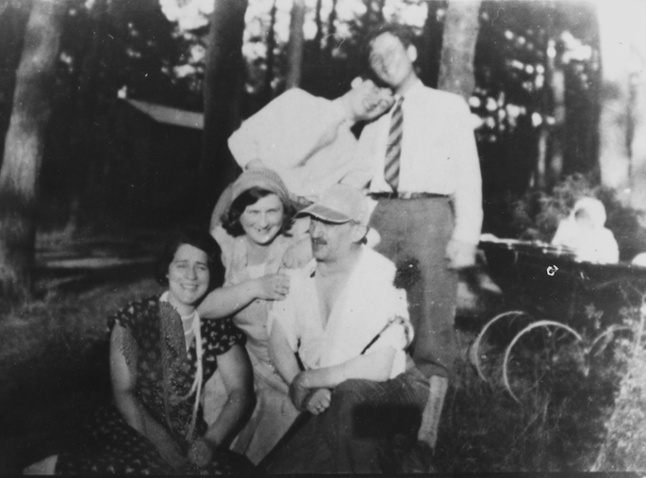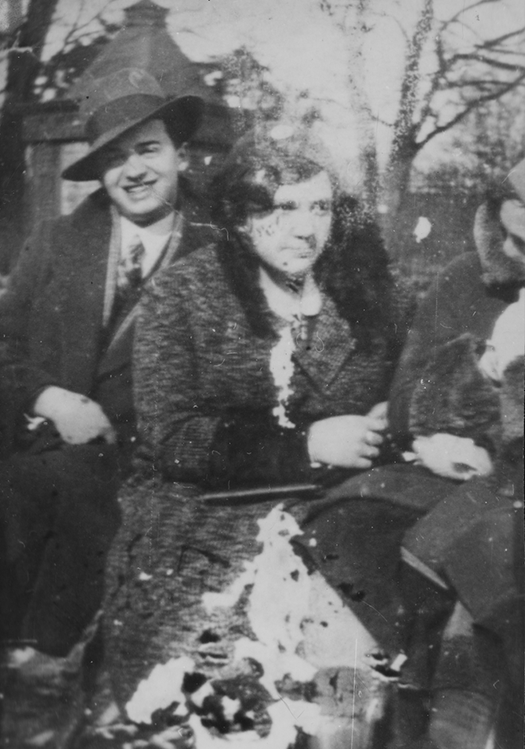
1912 (ou 1914), Varsovie – 8 mai 1943, ghetto de Varsovie
Władysław Szlengel était un poète, journaliste, satiriste et acteur de théâtre. Il est l’auteur de nombreuses chansons chantées à travers Varsovie. Il est le chroniqueur du ghetto de Varsovie, souvent appelé le « chroniqueur de la noyade », et l’auteur de l’hymne des insurgés.
Né en 1914 à Varsovie, son travail artistique était largement lié à la ville. Du début des années 1930 jusqu’au début de la guerre, il collabore avec ‘Nasz Przegląd ‘(« Notre revue »), un journal de la minorité juive de Varsovie. Il a également publié des articles dans l’hebdomadaire satirique Szpilki (« Épingles/Talons hauts ») et a écrit sur des questions sociales et politiques pour Robotnik (« Travailleur »). Il n’écrivait qu’en polonais et aimait particulièrement créer du matériel pour les cabarets. Il fournit des paroles et collabora avec des théâtres tels que ‘13 Rzędów’, ‘Ali Baba’ et ‘Tip-Top’.
Lorsque la guerre éclate, Władysław et sa femme déménagent à Białystok, où il travaille pour le Théâtre Miniature. Au début de 1940, il retourne à Varsovie et est transféré dans le ghetto. Il gagne sa vie en travaillant au café d’art ‘Sztuka’ (« Art »).), aux côtés de l’actrice de cabaret Wiera Gran et du pianiste Władysław Szpilman. Il a collaboré avec le groupe Oneg Shabbat, une organisation clandestine documentant la vie dans le ghetto de Varsovie. Ses poèmes décrivent la destruction du peuple juif.
En 1942, il réussit à éviter la déportation. Il est relégué dans un atelier de brosseurs appartenant à une entreprise allemande. L’atelier a également été utilisé par les travailleurs pour produire des explosifs pour les combattants de la résistance et a fourni un soutien à l’activité des Archives Ringelblum, c’est-à-dire les archives clandestines du ghetto de Varsovie, établies en 1940 à l’initiative d’Emanuel Ringelblum. Les tentatives de Władysław Szlengel pour se réfugier du côté « aryen » de la ville se sont avérées infructueuses. Il est mort lors du soulèvement du ghetto de Varsovie en 1943.
THE TELEPHONE
Text: Władysław Szlengel
English translation: Bente Kahan and Dahlia Luxemburg
With a saddened, broken heart
I was sitting alone
Thinking about the other side
There by the telephone
And I thought: I’ll call someone
on the other side of town
Being on my shift at night
there by the telephone
And then I thought: My God,
I have no-one really to call
In 1939, my path
separated me from them all
We were parted all of a sudden
The friendship we had are gone
And therefore at this moment
I have no one really to call
The wind blows outside my window
The evening is dark, it’s fall
I would like to talk to someone
But I really have no one to call
I pick up the phone's earpiece
The line swings in a pitiful way
I dial a number I know
A speaking clock answers, then I say
Excuse me, do you recognize me?
I ask quietly
It was 7 th of September some years ago
at that time I was still free
I said farewell to my room at dawn,
I saw what was up
And for the last time you said to me
it’s already six o’clock…
Do you really want to talk to me now,
I’m in tears, my voice is unclear
Say something, speaking clock…
… Ten fifty three—
How often my life was entwined
with this voice so calm, so fixed
-do you remember me, speaking clock,
—Ten fifty six—
TEN FIFTY SIX
Let’s recall it if you want to
It’s 1939
A film that I had just gone to
TEN FIFTY SEVEN
I took tram number 0 home
from Chmielna street's Atlantic
A Gary Cooper film was on
A newsboy sold “Red Courier”
on Zlota Street that night
and the asphalt looked like the aurora
from the colorful neon lights
Tram 0 took a turn
into the heart of the city, and then
What do you say, speaking clock
- ELEVEN
Nowy Świat was still sparkling
and couples walked the street
“Café Club” was still open
ELEVEN OH THREE
Fresh sausages sold at “Quicks’”
Lots of diners were served
Taxis outside “Café Adria”
Meczysaw Fogg’s songs were heard
Trams drove to their final stops,
last ride home not to be missed
What was the time approximately?
— ELEVEN FORTY SIX—
How nice it is to talk to you
Not arguing, no different opinions
Speaking clock you’re nicer
than all my former women
It will be much easier now
when calling I’ll hear a sound,
Someone will peacefully listen,
on the other side of town,
And that someone remembers it all
That there once was a common fate
And is not afraid to talk to me
With a calm voice so late
It's a rainy autumn night
wind is blowing in the sky
we chat and daydream together
Speaking clock and I
Be well, my distant friend
There are hearts where nothing will change
It's five to midnight you say -
You are right... so farewell